2.4 Referencing Culture Without Copying It
The Four-Question Referencing Checklist
What is the quality I'm actually trying to translate, not the surface aesthetic?
Have I researched this deeply enough to name specific sources and explain them?
Is there genuine creative resonance between this reference and my brand world?
Am I translating the quality or reproducing the surface?
There's a gap between being influenced by something and imitating it, and the distance between the two is research.
Most creative work that feels as derivative comes from taking the reference at the surface level (the aesthetic, the colour, the mood) without going deeper to understand what produced that quality in the first place. When you reference a surface, you reproduce it. When you reference the thing beneath the surface, you translate it, and translation produces something new.
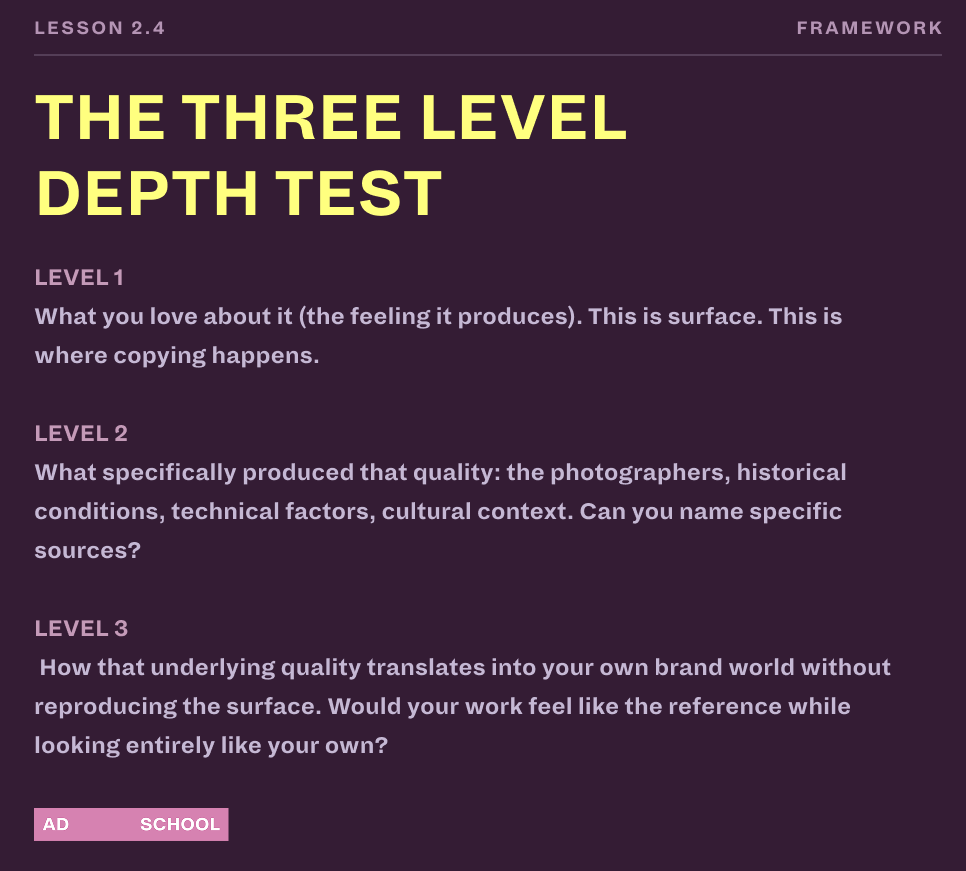
The three-level depth test [see framework] is a diagnostic. Most people stop at level one: the feeling an image or body of work produces in them. This is real and necessary, a reference that produces no genuine response has no business being in your archive. But a feeling is the beginning of understanding, not the end of it. And understanding is what lets you use a reference instead of simply to reproduce it.
Level two is where the research actually happens. It asks: what specifically produced this quality? If the reference is a body of photography, this means learning the photographer's name, their period, their influences, the technical conditions they were working under, the cultural context that shaped what they chose to look at. If the reference is a film, it means understanding the director's intentions, the cinematographer's choices, the way the film was received and why. This level of knowledge changes what you can do with a reference fundamentally. You're responding to the cause, not just the effect of it.
Level three is where the genuine creative work happens: taking the underlying quality and asking how your brand would translate it into something that could only be yours. This is about passing the reference through your specific creative sensibility until what emerges belongs completely to your world.
A literate eye can locate a surface reference even when the hand that made the work can't. When a reference has been taken at level one, the seam is visible. When it's been taken at level three, the seam is invisible and what remains is original work that happens to carry the quality of something you love.
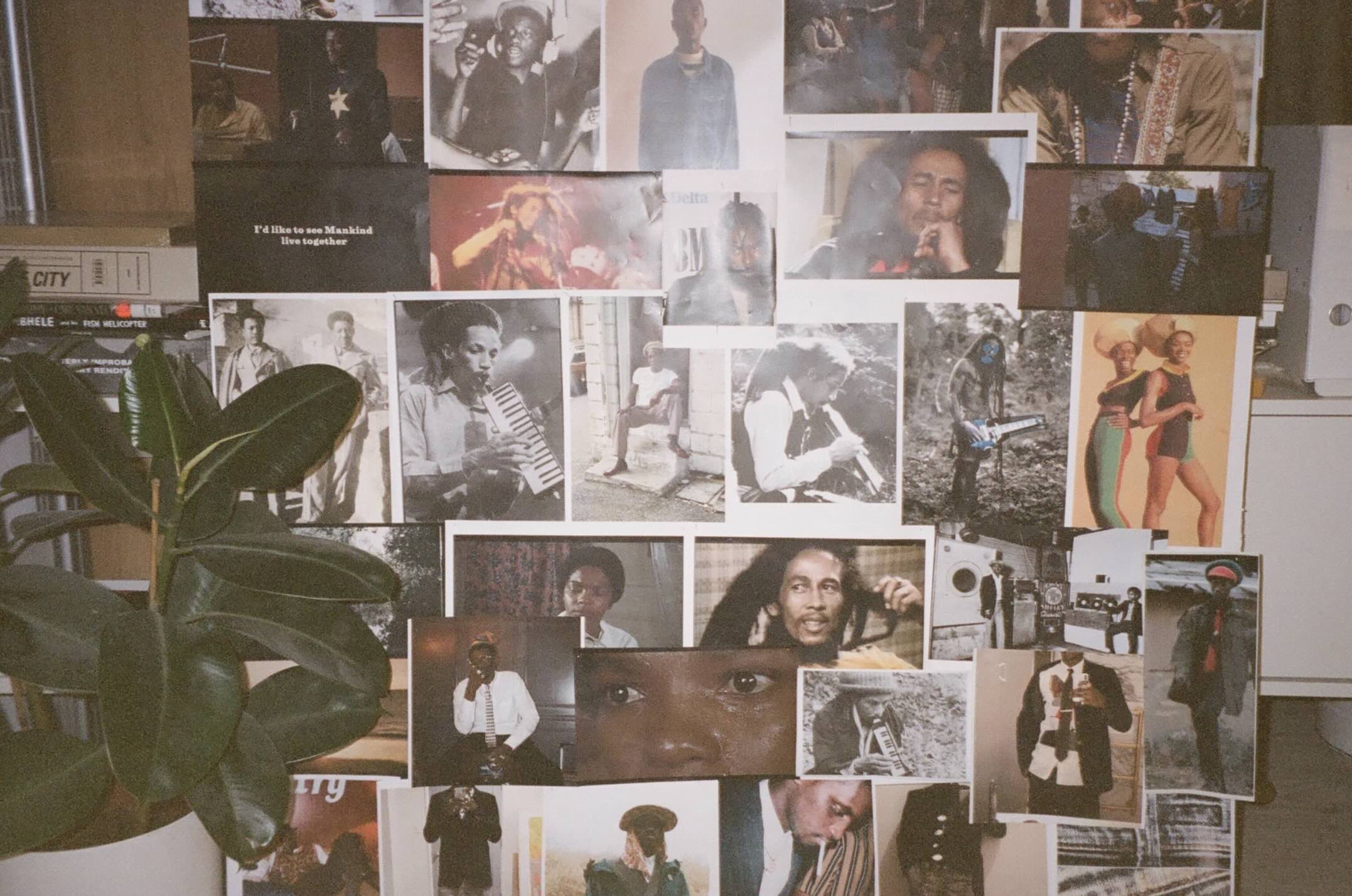
Brand Example: Wales Bonner Grace Wales Bonner's FW20 Lovers Rock collection reached into primary sources: Armet Francis's photographs, the music of Burning Spear and Lee Perry, the writing of C.L.R. James. The visual outcome carries that world entirely in spirit, it doesn't look like 1970s Jamaica. This is the distinction between translation and reproduction: the research went three levels deep, which is why the outcome couldn't be copied even if someone knew exactly which sources she used. The depth can't be faked, and that depth is what produces genuinely original work.
The next lesson takes everything from research and reference and turns it into the document that makes a shoot possible: the creative direction brief.